Maritime History
Fath Al Khair: An Omani Ship Ends a 50-Year Tale of Exile
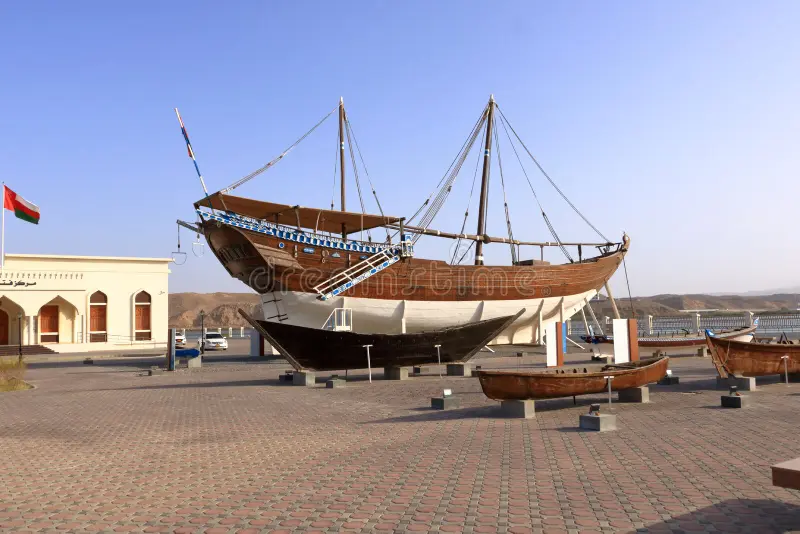
The ships were among the historical witnesses that the Sultanate of Oman enjoyed; some considered them Oman's ambassador to all lands in that age. On a visit of ours to the Wilaya of Sur — that maritime wilaya in the east of Oman — we saw the ship "Fath Al Khair", which stands proudly on the edges of the town's shores and its glittering sea as a living example of this history. In truth, that ship is the only surviving specimen of about a hundred "ghanjas" that began their life in Sur sixty years ago, so it stopped us to learn more about its story and its maritime role. By good fortune, on our visit to it we found that there were some foreign researchers investigating the ship's pioneering role in its past history, its structural components, its content and its building materials.
The ship "Fath Al Khair" is one of the trading ships that roamed the seas and gulfs carrying the imported and exported goods of the Sultanate to various lands at that time and back, bearing the Omani identity. It was sold at the time to one of the merchants, then the efforts of the devoted sons of the Wilaya of Sur were crowned with success in buying it and returning it to its original home where the last of the ships was built — ships that the immense maritime fleet owned by the wilaya comprised, which had the great merit of making Oman known in the various ports where the ships of that fleet anchored.
"Fath Al Khair" was built in 1370 AH, corresponding to 1951, in the Al Rasha quarter of the city of Sur. Its building was supervised by the nakhoda — the title denoting the ship's captain — Mohammed bin Khamis Al Shaqqaq, and its ownership belongs to Nakhoda Saeed bin Khamis Wuld Shila Al Qasimi. The ship is considered a haunt of the most numerous and most famous nakhodas who took charge of its command at that time, among them Abdullah bin Rashid bin Saeed Muhanna Al Sanani (may God have mercy on him) and Saeed bin Mubarak Al Ateeqi.
It was named "Fath Al Khair" (the opening of good) as an omen for its commercial endeavours and the falling of rain on the first day of its construction. Fath Al Khair worked for 43 years, of which 24 years were in Sur and 19 years in Dubai and Yemen after its sale.
The ship "Fath Al Khair" used to carry the Omani goods of dates, unripe dates, ghee, oil and what was found in the land of Oman at that time, heading with it to the African coasts of Zanzibar, Pemba and Malawi, to India and Basra in Iraq, and to some Gulf states such as Bahrain and Qatar; it carried aboard what is called the "daan", for making the roofs of houses, and also carried spices, seasonings and the various goods of those lands. Fath Al Khair was sold long ago to a merchant from Dubai called Saif bin Saeed Al Jarwan, who bought it in 1975 and then later sold it to Yemeni merchants. The ship was, and remained, in Yemen until 1993; on a visit by one of the devoted sons of Sur to Yemen, he saw it there and informed the family of the first owner, and the idea of returning it took shape — being the last ship of its kind — to its original home, Sur. With financial support from Sheikh Suhail bin Salem Bahwan and Sheikh Salem bin Saeed Al Fanna Al Oraimi, and at a cost of OMR 31,500 or about USD 83,000, the task of commanding the ship "Fath Al Khair" and returning it to its birthplace was entrusted to Nakhoda Mohammed bin Hamad bin Najim Al Ghailani. After its arrival it was anchored in Khor Sur, opposite the quarter that witnessed its first birth, and placed on reclaimed land beside a modern corniche surrounding the old city, where it will be the nucleus of a maritime museum that the people of Sur intend to establish as a witness to the city's antiquity and the greatness of its maritime history, to be a towering symbol of the city through the ages. And of course, the price was not cheap for its return.
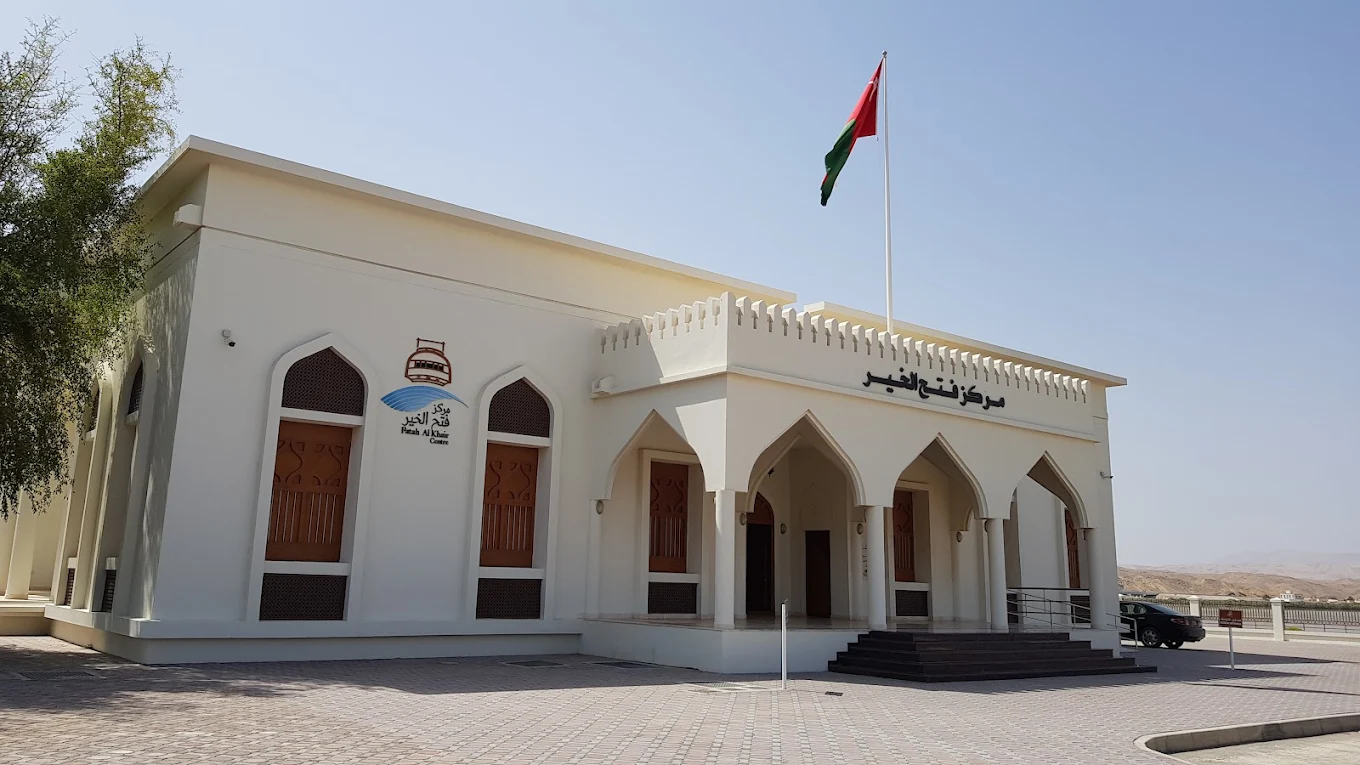
This ship is considered one of the heritage landmarks that reflect the Omani maritime front that roamed the seas and oceans of the world. After the ship was returned to Sur, efforts and the endeavours of institutions — including the Ministry of Municipalities, Environment and Water Resources and the Oman LNG company — combined to begin establishing a centre and museum for it, comprising in its contents the models and maritime artefacts related to the sea and to this very ship.
https://www.youtube.com/watch?v=XtLigHj4PvE&t=2s