Explore Sur
Ras Al Hadd: The First Spot in the Arab World to See the Sunrise
Ras Al Hadd.. the first spot in the Arab world on which the sun rises. This coastal area, about 46 kilometres from the city of Sur in the Al Sharqiyah region, forms a natural environment whose virginity has not been scratched by urbanisation.. and a recreation resort unique of its kind, by virtue of the tourist assets it enjoys that no eye can miss — pure beaches and the splendour of the place's terrain — as well as embracing the largest reserve for the nesting of green turtles in the region and a number of water inlets (khors) that are a refuge for migratory birds, in addition to the exceptional weather, cold in summer and mild in winter.
By the standards of eco-tourism, the nyabah of Ras Al Hadd is considered an ideal tourist destination for those seeking the beauty of nature and a life of calm and serenity; tourist groups from within the Sultanate and abroad visit it throughout the year.
And since the tourism-development plans in the Sultanate are based on making use of the natural assets in which the governorates and regions abound, the nyabah of Ras Al Hadd has imposed itself within the tourism-development strategy, where a promising future awaits it.
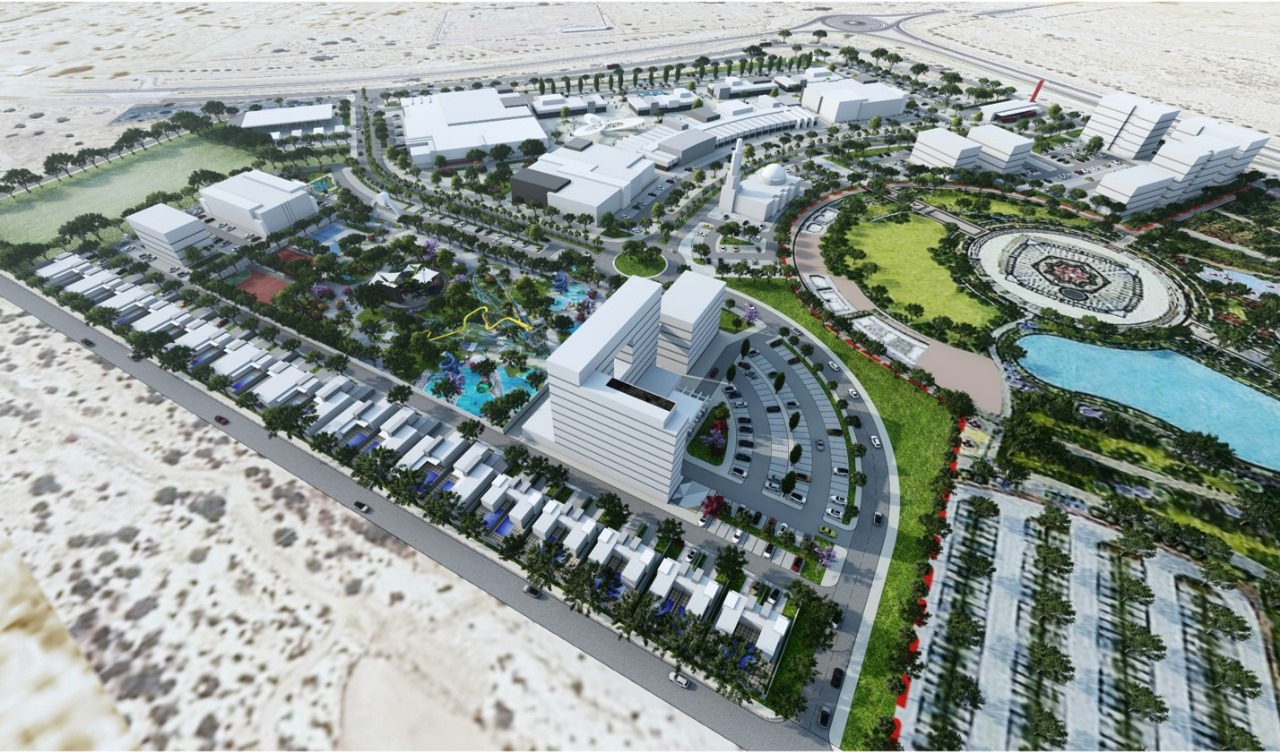
The nyabah is expected to witness a distinctive eco-tourism project, the Ras Al Hadd tourist resort, which is currently in the preparation phase, in addition to a number of other future tourist projects; the Scientific Centre at Ras Al Hadd at the entrance of the turtle reserve has also been completed.
The reserve extends over an area of 120 kilometres of beaches, coastal land, seabed and the two khors of Al Hajar and Jarama, and attracts the largest number of green turtles nesting in the Sultanate.
.. The Ras Al Hadd airport project is currently being built in several phases, considered a fundamental pillar for the tourism sector in the Al Sharqiyah region in general, and it is expected to contribute greatly to invigorating tourist and economic activity.
"$" visited the nyabah of Ras Al Hadd, where we had a tour of a number of the wonderful tourist sites in the nyabah, which we began with a stroll along the nyabah's beaches, distinguished by their cleanliness and beauty, while the fishermen's boats anchor on the edges of the coast. An asphalt road crosses the nyabah's centre, taking you, dear tourist, to the fort of the nyabah of Ras Al Hadd; and there, on the shore, you will find beautiful places naturally prepared for rest and recreation, so you can spend pleasant times on the rocky edges at one moment and on the soft sands at another, gazing at the blue of the sea and enjoying the swaying of the anchored "launches" scattered near the shore, caressed by the calm waves..
During our visit to the nyabah of Ras Al Hadd we drew closer to the tourism-development projects in the area, and our visit was to the Scientific Centre at Ras Al Jinz, this project unique of its kind in the region.. which was operated by the investor in November of last year in an experiment to learn the challenges he might face at this stage before its official opening soon..
At the beginning of our visit to the nyabah of Ras Al Hadd we met Sheikh Talal bin Saif Al Housni, deputy wali in Ras Al Hadd, who explained that the nyabah of Ras Al Hadd has a unique tourist attraction that has made it a destination for all visitors from within the Sultanate and abroad, and said that the future of this nyabah in the tourism and economic sectors is moving with steady steps according to studies and the methodology of tourism and economic development; sustainable tourism is tourism that is developed and managed in an organised way to ensure the continuity of all the tourist activities related to it, especially those based on natural resources and heritage.
He added: it can be said that tourism has become one of the economic tributaries with a positive return in the first place, and from here, the nyabah of Ras Al Hadd has unique tourist assets that have distinguished it from the rest of the other tourist sites, by virtue of the presence of the largest reserve for the nesting of green turtles in the region, in addition to the advantage of the mild weather in summer and winter; moreover, Ras Al Hadd is the first spot on which the sun rises in the Arab world. Apart from that, it is distinguished by the presence of the most important khors — Khor Jarama and Khor Al Hajar — which can contribute effectively to supporting sustainable tourism, and from here we find that the great role remains in investing in these sites touristically and economically, noting that the economic feasibility of such projects bears fruit by virtue of the tourist assets and the nature and terrain of the place; and I believe the investment opportunities came according to studies that will be feasible and will have a positive return, God willing.
The Scientific Centre
At Ras Al Jinz, where the turtle reserve is, we visited the Scientific Centre, this new project that comprises a centre for studying turtles and aquatic life, a museum for the archaeological finds discovered at Ras Al Jinz, in addition to a scientific library specialised in environmental studies and rooms for research and reading, as well as the centre's annex, which contains rooms for accommodation, a restaurant and a shop for selling traditional handicrafts. The Scientific Centre at Ras Al Hadd lies at the entrance of the turtle reserve on a plot of land of 21 thousand square metres.
The cost of the project's construction and fitting-out reached one million Omani rials, funded by the Ministry of Tourism and the Oman Liquefied Natural Gas Company. The centre organises two trips a day for tourists to watch the turtles, comprising only one hundred persons on each trip, accompanied by eight tourist guides and as many assistants and turtle monitors, with the aim of preserving the quiet in the places where the turtles nest.
In the lobby of the Scientific Centre at Ras Al Hadd we were received by Zainab Bahwan, the executive coordinator responsible for bookings, who took us on a tour among the centre's facilities and corridors — from the reception hall, where guests are welcomed and the visit to the reserve is arranged, to a shop for selling handicraft products adorned with various kinds of the creations of craftspeople in the handmade crafts of the people of the desert and the sea.
At the shop's entrance we met Saleh Al Amri, who spoke about the tourists' passion for handicrafts and their keenness to acquire souvenirs from the shop. After that we moved to the centre's restaurant, which overlooks the reserve, and where visitors can have their food while enjoying a beautiful sea view.
A library and a research room
Then our hostess took us to the first floor of the centre, which includes a library, a research room and a number of rooms for the centre's guests who wish to spend a night or more. In the centre's library, equipped with computers, we met Hind Al Ghailaniyah, the librarian, who explained that the library provides information about the environment, the reserve and marine life, and special books that enrich researchers and students. She said: the library is electronic and its references will be by means of the computer and the internet, and there are also book references classified according to the Dewey decimal system.
Then we went down to the ground floor again, for the executive coordinator responsible for bookings, Zainab Bahwan, to point us to a corner of the most important of the centre's facilities, where it will house a museum for the archaeological finds that has not yet been fitted out.
The Sambuk Restaurant
At the Sambuk Restaurant, Zainab said that entry to the beach during the daytime is from eight in the morning until half past one in the afternoon on foot, while the company that manages the centre provides means of transporting the disabled to the beach, pointing out that there are two periods in the day for visiting the turtle reserve: the first begins at nine in the evening, during which photographing the turtles and using lights is forbidden, while the second trip begins at four at dawn, during which photography is possible at the start of sunrise. She said that tourists flock throughout the year to watch the turtles, but come in large numbers during the period from November to April, and the number of visitors daily reaches one hundred. She explained that only 100 persons are allowed in on each visit, divided into groups accompanied by 8 guides and assistant guides and two persons working as turtle monitors, with the aim of organising the movement of the groups and preserving the quiet in the turtles' environment.
Visits to the reserve
Tourist trips to the reserve are organised so that visitors can watch the turtles at night during nesting, but the use of lights or taking photographs during the visit is forbidden, because light confuses the turtles and prevents nesting. To control this process, the tourist guides organise the trips into the reserve and distribute the visitors into small groups, each going in a direction with the help of a small lamp by which the visitors feel their way on the sandy beach, where they can watch large numbers of turtles nesting quietly.
Commenting on the importance of the Scientific Centre touristically, Sheikh Talal Al Housni, deputy wali in Ras Al Hadd, affirmed that the establishment of the Scientific Centre at the turtle reserve at Ras Al Jinz comes to strengthen the Sultanate's role in preserving the environment, as it is a scientific tributary that serves greatly a large segment of researchers and those interested in the various environmental, climatic and marine aspects, in addition to its presence at the site of the turtle reserve at Ras Al Jinz. The body in charge of the centre seeks to provide the best services to the reserve's visitors, with some inclinations towards supplying the centre with the latest high-quality technical equipment to add some features to this centre.
A new expansion. Sheikh Talal Al Housni added: in my belief there will be many roles the centre will play to serve the centre's patrons and the area's visitors in general, and it is hoped to open it soon, God willing; and as for developing the Scientific Centre, there will be a new expansion at the same current site for some purposes related to developing the role of this centre.