
Sur Clothes
Old Bareesam Can Be Found at the 'Wud Hira' Shop
Visited by: Dr Mohammed bin Hamad Al Oraimi
The well-known folk poet Rashid Al Maslahi "Suwairi" has a famous line with which he concludes one of his poems, saying:
I want no shade of the lote-tree, out of wonder at the jasmine ….. and they have replaced for me, after the bareesam (silk), wool!
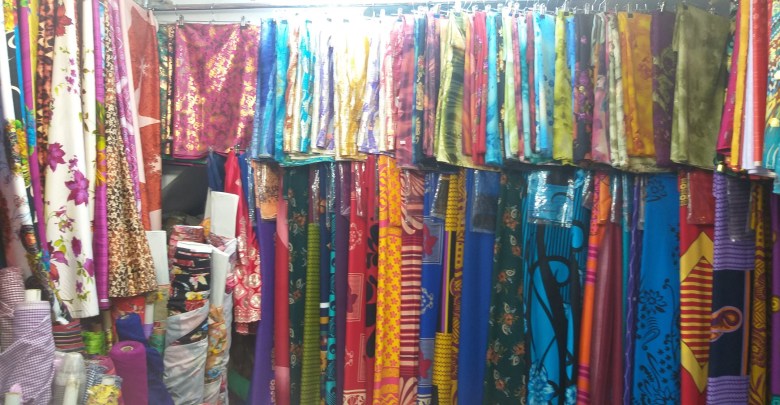
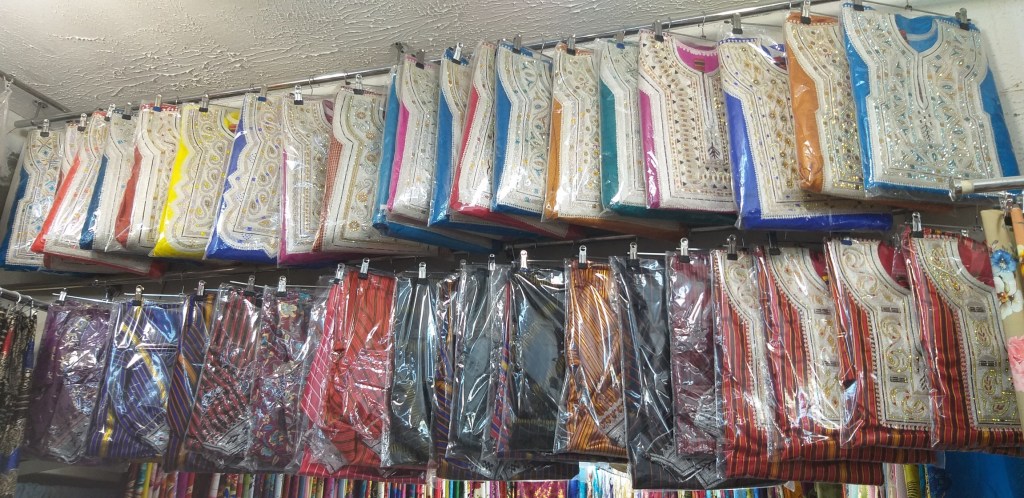
Names of terms such as: al harqani, ain al baqar, al kojrati, bu shawat, shadir al tarh, the bareesam dress, al qubaa, the haidari misr, al sibaiyya, appear strange and unpalatable to many of the present generation — the generation that lived through urbanisation, who buy some of their clothes from the finest shops bearing the various logos of well-known brands, and have some of them sewn in modern tailoring shops; but of course they do not seem so to the sons of the previous generation, for they are well-known, current names for kinds of fabric and clothing, most of which were imported from India, and some made in local textile factories by skilled Omani hands. These garments once formed part of the local culture, and were associated with many social occasions — weddings, circumcision celebrations, folk arts and others — and were considered a marker of fashion and (elegance) in that beautiful time!
The Wilaya of Sur is one of the cities and places that still retains those memories, for it formed, over a long period of time, one of the most important ports of Omani and Gulf trade. The sight of the ships coming and going with the goods and commodities of East and West, being loaded at the bank of its famous khor (Al Batah), was familiar to its residents and visitors, before they moved afterwards to the stores, warehouses and large shops in its famous souk, part of whose trade was controlled by a community of Indian merchants with a long-standing presence in the city, as a result of the commercial relationship that linked Sur to the ports of India and the East.
"The banian merchants dominated the scene of trade in Sur because of their great experience and their relations with their compatriots in India. Although the banians did not have their own ships (except for a few), they managed their trade well by renting ships from their owners to bring the main foodstuffs from their agents in India and then distribute them to the smaller merchants in other regions; but in Sur, it was they who carried out the whole process. Rice, flour, ghee, spices and fabrics were the most important things imported from India."
The visitor to the souk of Sur, wandering its various corners and nooks — despite the attempts at change and substitution practised by the new Asian sellers, aimed at emptying the souk of its beautiful civilisational content — still finds something of the fragrance of the past, and a little of the smell of the ships with the goods they carried, and almost imagines the camel caravans walking slowly along the city's important artery called "Sikkat Al Boush", on their way to and from the port. Among what remains of the traces and features of that time are some shops that still retain their traditional character, and still carry on their old commercial activity, whether in the field of clothing and fabrics, or basic goods, or the trade of herbs, perfumery and the like.
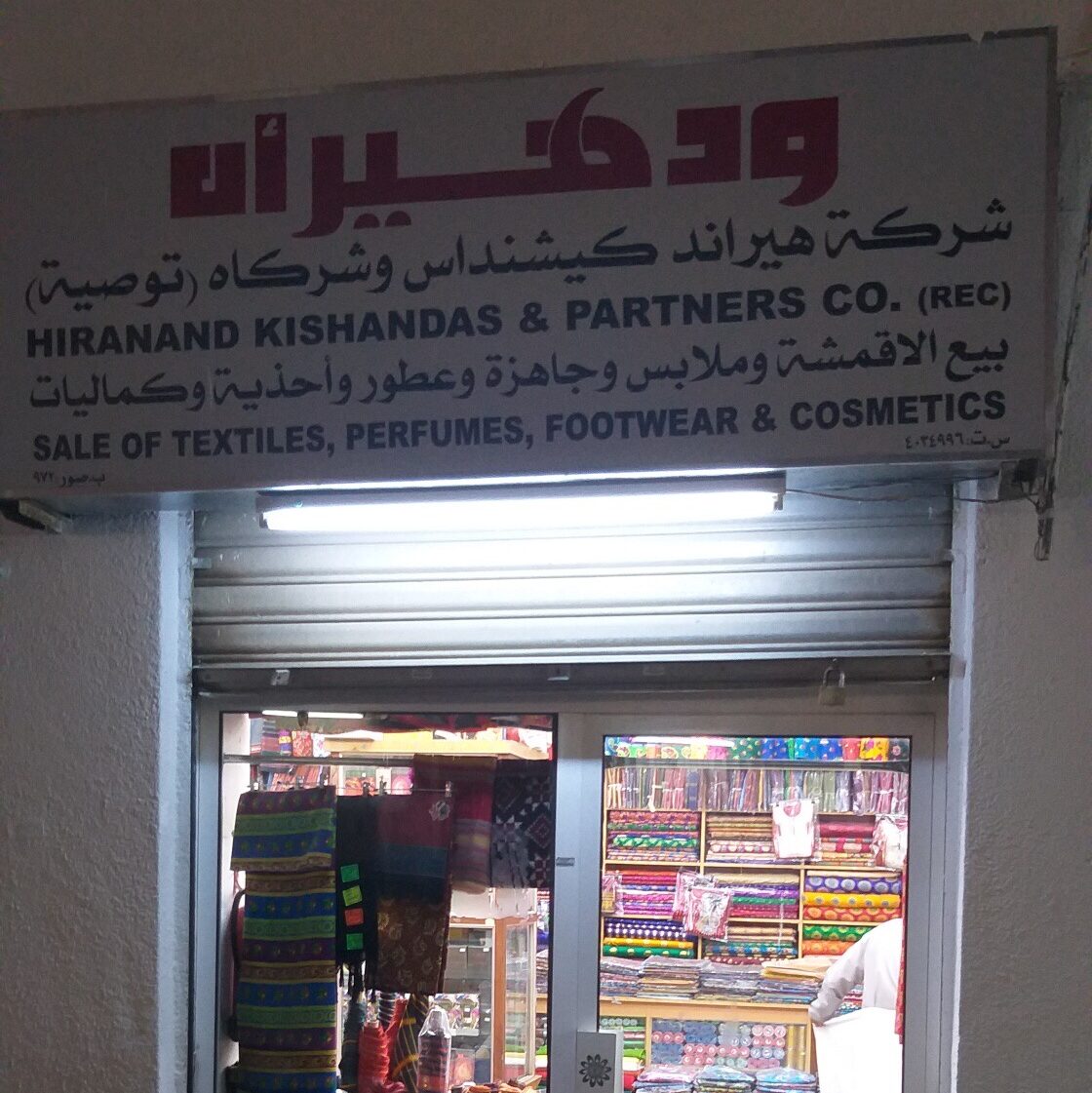
"Wud Hira" is one of the few Indian merchants who still exist in Sur and retain their original activity of selling old goods and commodities, after some of them died, some emigrated, and a third group changed their activity to keep pace with the developments of the age. His shop appears strange in the middle of the souk after demolition removed the shop of his companion and neighbour of long years, "Wud Keesoh", and the remaining people of his community replaced their traditional shops with modern ones competing with the new shops.
Despite the variety of shops, the shop of "Wud Hira" remains a hard currency whose value is appreciated by those searching for (the old bareesam), and his customers still flock to him from within the wilaya and outside it, in search of fabrics whose names have become forgotten amid the frenzy of westernisation, modernisation, urbanisation and development, and perfumes whose fragrance is still wafting.
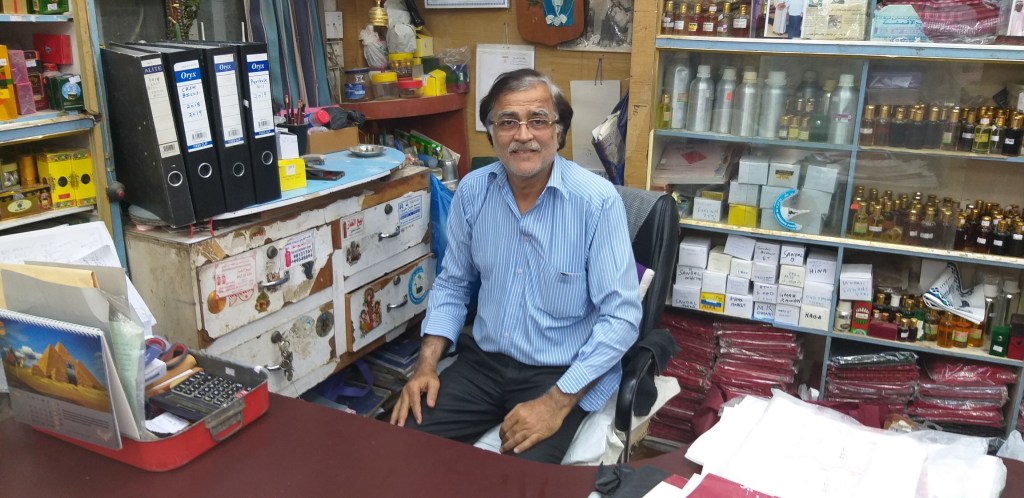
When you enter the shop of "Wud Hira", which is about seventy years old or more after it moved to its current location, and over which three generations have passed in turn, you feel that time stands still, for the shop is the same as when you last entered it about ten years ago, and as it was when your feet trod its threshold with your father when you were a child about thirty years ago or more, and the same traditional displays except for some modern goods that have mixed and intermingled with the old to suit the desires of some customers. As soon as you step inside it, you glimpse the shadir al tarh, the sibaiyyat, the haidari misars, the traditional Sur dresses, the Omani sumaili izar, and the kinds of fabric of immortal memory in the hearts of many women, such as ain al baqar and al harqani, hung in the precise arrangement known of these professional merchants, while the old perfumes such as amber, al nadim, musk and other kinds of perfume — most of which were brought from India — are arranged in glass cabinets surrounding the place, alongside some memories of Sur captured at different periods of time, and certificates of thanks and appreciation, which form a backdrop to the old seat on which the shop's owner sits beside his ledgers that record many of the commercial dealings that took place in the shop, and contain the names of many merchants and customers who entered the shop one day and dealt with its owner by credit, loan or purchase.
Reference:
Al Mukhaini, Khalid bin Ali. The Road to Sur, 2nd ed., Bayt Al Ghasham for Printing and Publishing, Muscat, 2019 / Atheer
Wud Hira's telephone: 25540056